
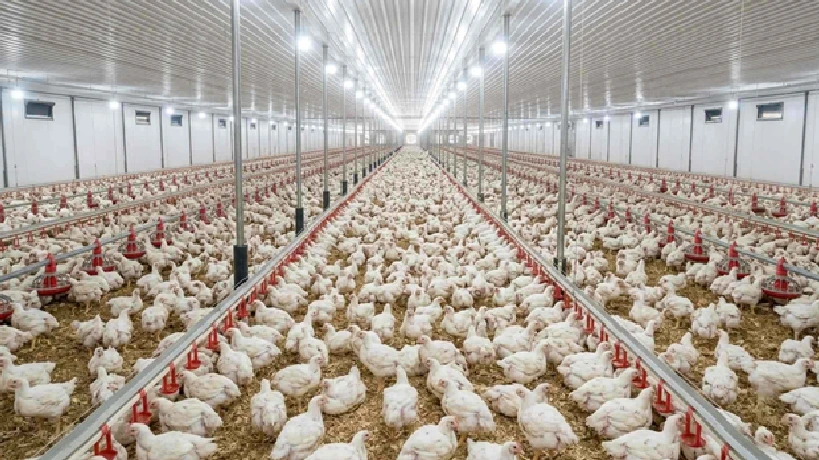
Introduction: Why Light is a Critical Nutrient
In modern broiler farming, light is often described as a “forgotten nutrient.” It governs the bird’s biological clock, influences behavior, and directly impacts physiological development. Unlike human vision, chickens perceive light intensity and spectrum much more acutely. Proper lighting management is not just about visibility; it is a precision tool used to optimize Feed Conversion Ratio (FCR), minimize stress, and ensure uniform growth across the flock.
1. Understanding the Light Spectrum
The color of light, or its spectrum, plays a vital role in broiler performance. While traditional farms used standard bulbs, modern technology allows us to use specific wavelengths to achieve different results:
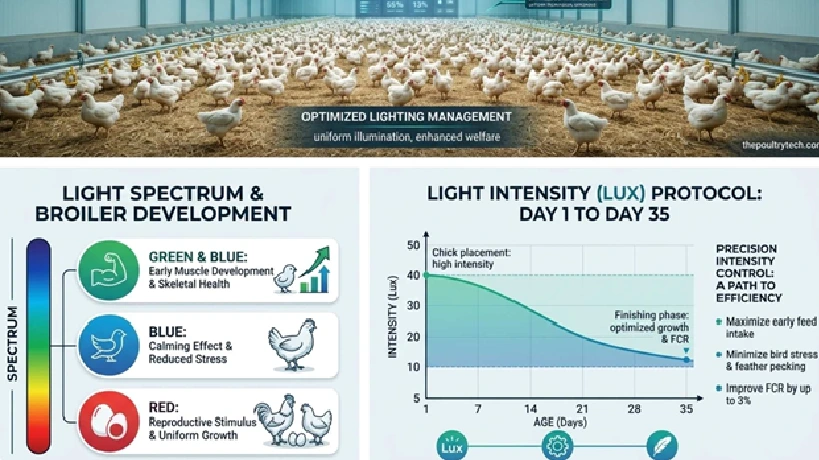
- Green and Blue Light: During the early stages of a chick’s life, green and blue light stimulate muscle growth and enhance the immune system. Green light promotes early skeletal development, while blue light has a calming effect on older birds, reducing activity and preventing injuries.
- Warm White Light: Provides a balanced environment that mimics natural conditions, ensuring that birds can easily locate feeders and drinkers without excessive stimulation.
2. Photoperiods: The Importance of Darkness
A common mistake in broiler management is providing 24 hours of continuous light. While this might seem like it encourages more eating, it often leads to physiological exhaustion.
- Melatonin Production: Birds need a dedicated dark period to produce melatonin, which is essential for immune function and bone development.
- Rest and Growth: During darkness, the bird’s body focuses on repairing tissues and strengthening the skeletal frame. This prevents metabolic disorders like “flip-over syndrome” or leg weakness in fast-growing modern broiler strains.
- The Ideal Cycle: A professional program typically includes 18 to 20 hours of light and 4 to 6 hours of total darkness, adjusted based on the age of the birds.
3. Light Intensity and Uniformity
Uniformity is the key to a successful broiler cycle. If light is unevenly distributed, birds will huddle in brighter areas, leading to uneven growth and wet litter issues.
- Lux Levels: During the first 7 days (the brooding period), high intensity (30–40 Lux) is required to help chicks find food and water. As the birds grow, the intensity should be gradually dimmed (to 5–10 Lux) to keep them calm and improve feed efficiency.
- Dimmers and Automation: Using programmable dimming systems allows for a “sunrise and sunset” effect. This prevents the sudden shock of lights switching on or off, reducing stress-related mortality.
4. Energy Efficiency and Durability
Since lighting runs for many hours a day, the choice of technology impacts the farm’s profitability.
- Longevity in Harsh Environments: Poultry houses are dusty and humid. Using high-protection-rated (IP67 or higher) lighting ensures the system survives regular cleaning and disinfection.
- Flicker-Free Technology: Chickens are very sensitive to light flickering, which can be invisible to humans but highly stressful for birds. High-quality systems provide a steady, flicker-free output, promoting a peaceful environment.
Conclusion: The Path to Better FCR
Effective lighting is a strategic investment. By controlling the spectrum, duration, and intensity of light, producers can directly influence the profitability of their broiler operation. When birds are well-rested, stress-free, and growing uniformly, the resulting FCR improvement pays for the lighting system many times over.