In the modern poultry industry, the hatchery is no longer just a place where eggs are incubated; it has become a high-tech data center and a hub of robotic precision. As global demand for poultry meat and eggs rises, hatcheries are turning to automation to ensure consistent chick quality, reduce labor costs, and meet stringent animal welfare standards.
1. The Shift toward Seamless Automation
Traditional hatchery management relied heavily on manual labor for egg handling, candling, and chick processing. However, manual processes are prone to human error and bio-security risks. Modern automation integrates every stage of the process—from the moment eggs arrive at the facility to the point where day-old chicks are dispatched to farms.
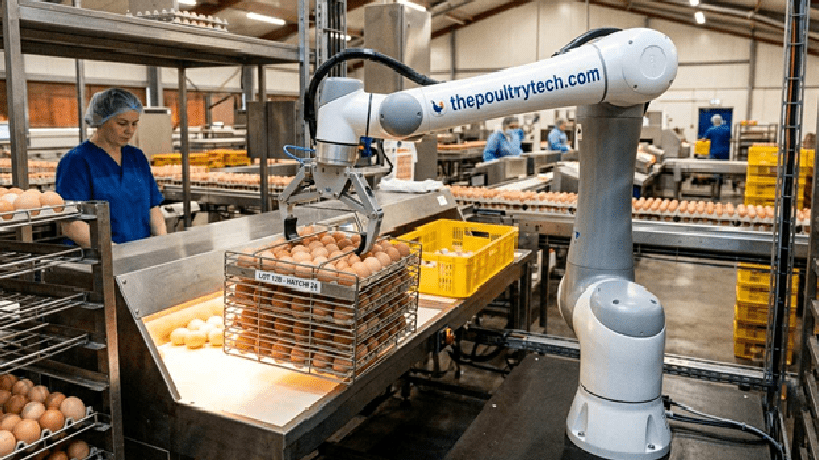
- Egg Handling & Setting: Automated systems now handle egg tray and setting into incubators with extreme gentleness, significantly reducing hair-line cracks that can lead to contamination and poor hatchability.
- Uniformity through Robotics: Robots ensure that every egg is positioned perfectly, which is critical for uniform heat distribution during the incubation cycle.
2. Advanced Candling and Heart-Rate Monitoring
One of the most significant breakthroughs in hatchery technology is automated candling. Instead of manually checking eggs, sensors now use high-speed light and thermal imaging to identify infertile eggs or early dead embryos.
- Waste Reduction: Removing non-viable eggs early prevents them from exploding in the hatcher, which protects healthy eggs from bacterial cross-contamination.
- In-Ovo Heart Rate Sensors: Some advanced systems can monitor the embryo’s heart rate without touching the egg, allowing the climate control system to adjust temperature and CO2 levels based on the actual biological needs of the developing chick.
3. The “In-Ovo” Revolution: Sexing and Vaccination
For many international markets, especially in Europe, In-Ovo Sexing is becoming a legal and ethical requirement.
Gender Identification: Automation allows hatcheries to identify the sex of the chick while it is still inside the egg. This eliminates the need for manual sexing after hatching and addresses welfare concerns regarding male chick culling.
- Gender Identification: Automation allows hatcheries to identify the sex of the chick while it is still inside the egg. This eliminates the need for manual sexing after hatching and addresses welfare concerns regarding male chick culling.
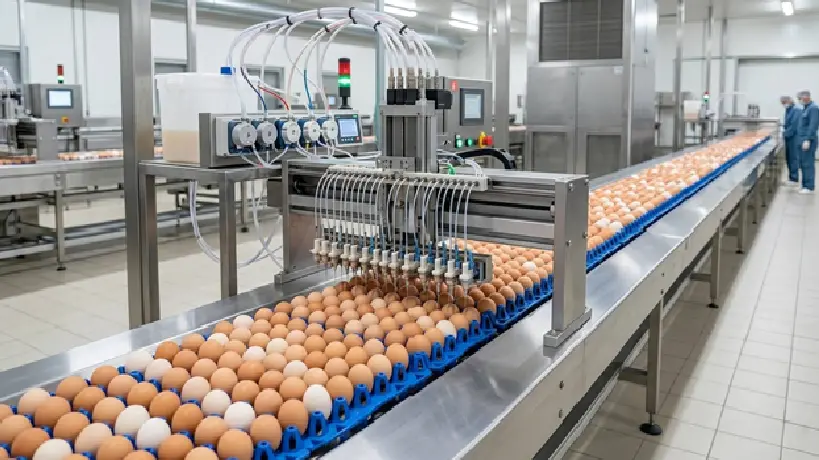
- Precision Vaccination: Automated In-Ovo vaccination systems deliver precise doses of vaccines through the eggshell. This ensures that every chick is born with a primed immune system, reducing the stress associated with post-hatch injections.
4. Climate Intelligence and “Hatch-Care” Concepts
Modern automation extends into the very atmosphere of the hatchery.
- Smart Ventilation: Automated fans with variable speed drives (Direct-drive technology) maintain optimal oxygen and CO2 levels. Sensors detect the exact moment when the “hatch window” begins, adjusting the environment to prevent dehydration in early-hatched chicks.
- Early Feeding Systems: New “Hatch-care” automation provides light, water, and feed to chicks immediately after they emerge from the shell, still inside the hatcher. This jumpstarts gut health and immune development, leading to better long-term FCR (Feed Conversion Ratio).
5. Data Analytics: The Hatchery as a Smart Hub
The true power of hatchery automation lies in the data. Every cycle generates thousands of data points—from humidity levels to shell temperatures.
- Predictive Maintenance: Smart sensors can alert maintenance teams before a motor fails or a sensor drifts, preventing catastrophic losses.
- Traceability: Automation allows for full traceability. Every box of chicks can be traced back to the specific breeder flock and the exact incubator conditions they were exposed to, ensuring food safety and accountability.
Conclusion
Hatchery automation is more than just replacing people with machines; it is about achieving a level of biological precision that was previously impossible. By investing in these technologies, hatcheries can produce stronger, healthier chicks with a higher degree of uniformity, ultimately driving the profitability and sustainability of the entire poultry value chain.