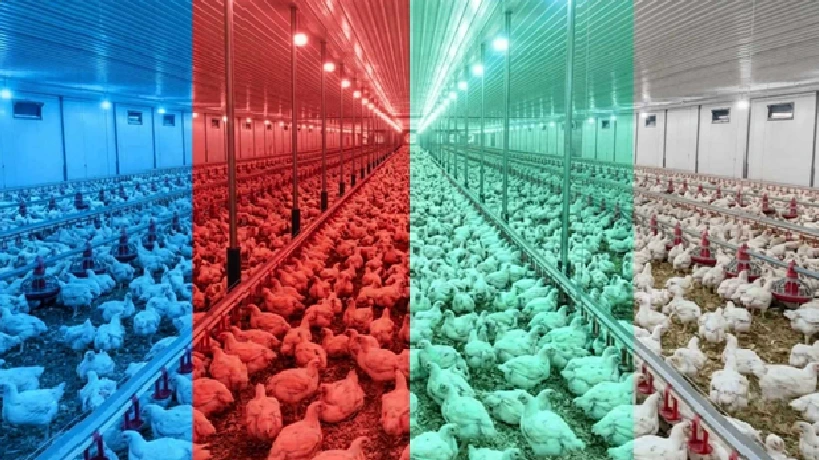
1. The Power of the Spectrum: LED Innovation
The transition from traditional incandescent bulbs to specialized LED lighting has revolutionized house management. Unlike humans, birds are highly sensitive to different wavelengths of light.
- Green and Blue Light: During the early stages of growth, green light promotes muscle cell development. As the bird matures, blue light helps in reducing stress and calming the flock, which prevents excessive movement and energy waste.
- Red Light: This spectrum is crucial for stimulating reproductive hormones and is more commonly used in layer or breeder operations. However, in broilers, a balanced full-spectrum LED ensures skeletal strength and overall vigor.
2. Simulating Nature: The Importance of Dimming
Abruptly turning lights on or off creates a “stress shock” for the birds. Smart lighting systems utilize Gradual Dimming (Sunrise/Sunset simulation) to allow the flock to wake up and settle down naturally.
- Reduced Mortality: Sudden changes in light can cause “crowding” or piling, leading to suffocation. Gradual transitions keep the birds calm and evenly distributed across the floor.
- Melatonin Production: Providing a defined dark period is essential for the bird’s immune system. Proper rest allows for the secretion of melatonin, which helps the bird fight off metabolic diseases.
3. Precision Control: Uniformity and Intensity
One of the biggest challenges in large poultry houses is “dark spots.” If some areas are darker than others, birds will huddle together, leading to poor litter quality and uneven growth.
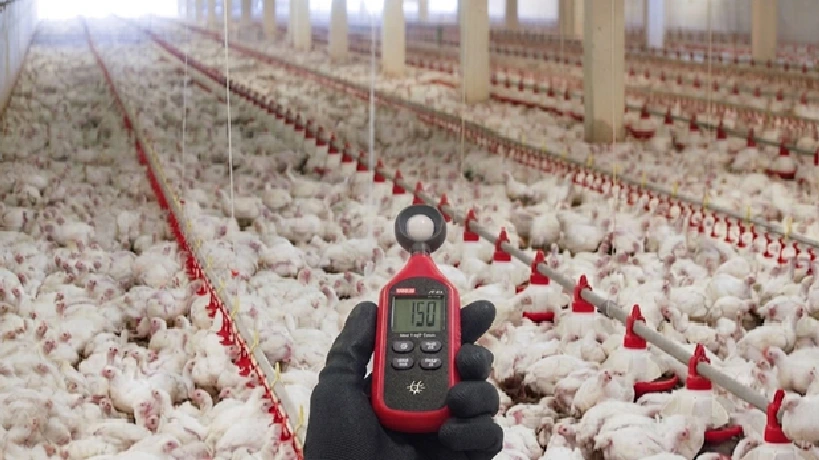
- Lumen Uniformity: Smart systems ensure that light intensity is consistent from one end of the house to the other.
- Adjustable Intensity: Young chicks require high light intensity (30-50 lux) to find feed and water quickly. As they grow, reducing the intensity (5-10 lux) helps in controlling aggression and improving feed conversion.
4. Energy Efficiency and Sustainability
For the modern farmer, the switch to smart LEDs is a financial decision.
- Lower Electricity Bills: LEDs use up to 80% less energy than traditional lighting and have a much longer lifespan in the harsh, dusty environment of a poultry house.
- Heat Reduction: LEDs produce very little heat, reducing the load on the ventilation and cooling systems during summer months.
5. Integrating Data with Lighting
The future of lighting lies in integration. Modern controllers link the lighting program with feeding schedules. By stimulating activity during feeding hours and encouraging rest thereafter, farmers can achieve an optimized Feed Conversion Ratio (FCR).
Conclusion
Investing in a smart lighting system is an investment in bird biology. By understanding the specific needs of the broiler at each stage of life, producers can unlock higher growth potential while significantly improving animal welfare. In the competitive global market, these technical “marginal gains” are what separate the most profitable farms from the rest.