Introduction: The Hidden Cost of Floor Eggs in Breeder Management
In the global broiler breeder industry, profitability hinges on hatching egg quality and clean collection. Yet, farm managers frequently battle a silent profit-drain: floor eggs. When hens choose to lay eggs on the litter instead of inside the designated nest boxes, labor costs soar, cleaning requirements multiply, and hatchability rates plummet due to bacterial contamination.
While evaluating our management practices, we discovered that one of the primary drivers of floor laying was light intensity. Hens seek dark, secure, and private environments for oviposition. In open-plan houses where light floods the nesting areas uniformly, hens feel exposed and reject the nests.
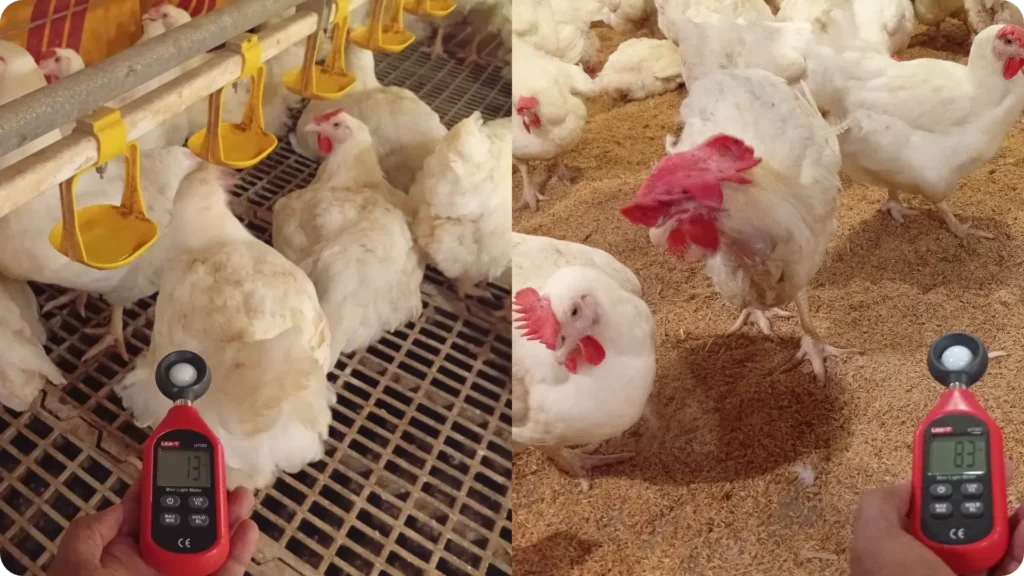
This comprehensive technical guide explores how a simple, low-cost lighting modification—shielding light bulbs near nest boxes to drop illumination from 83 Lux to a dim 13 Lux—dramatically increased nest box acceptance and eliminated floor egg issues in our breeder flock.
1. Understanding Broiler Breeder Behavior and Light Perception
Broiler breeders are highly sensitive to environmental stimuli. Unlike commercial broilers focused purely on rapid growth, breeder flocks require precise psychological and physiological comfort to optimize reproductive performance.
- The Desire for Privacy: Evolutionary instincts drive gallinaceous birds to seek secluded, shadowed locations away from the main flock and bright lights to protect their eggs from predators.
- The Lux Threshold: High-intensity lighting across the entire house removes the barrier between active feeding/scratching zones and resting/nesting zones.
- The Stress Factor: Excessive light inside or directly outside nest boxes causes hens to feel vulnerable, forcing them to drop eggs randomly on the floor slats or litter.
By studying these behavioral patterns, we realized that managing light was not just about day-length control for maturity, but about micro-environment light zoning within the house.
2. The Intervention: Transitioning from 83 Lux to 13 Lux
To test our hypothesis, we utilized a digital light meter to measure illumination levels across different zones of our production house.
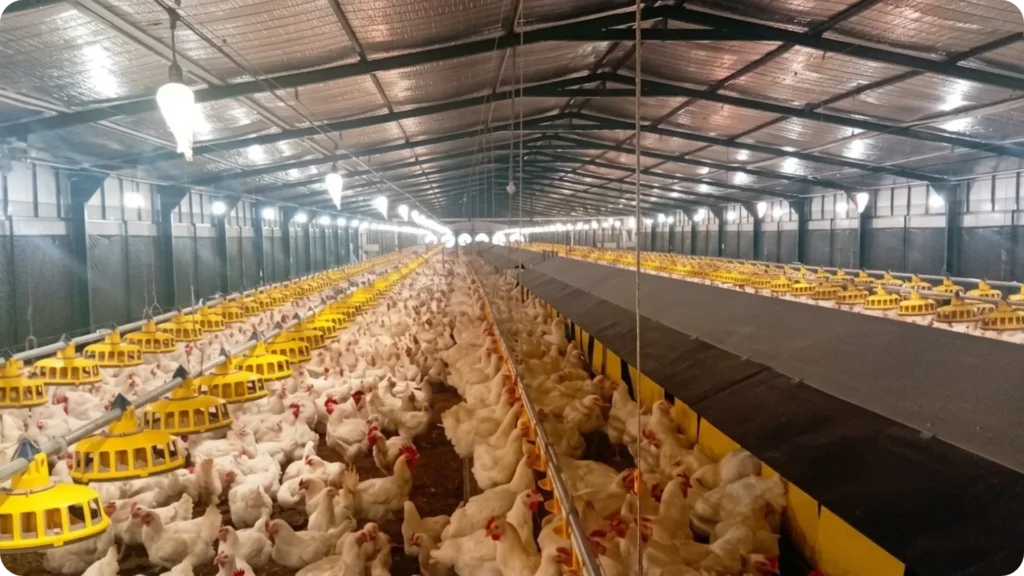
- The Open Rearing/Feeding Zone: Measured at 83 Lux, providing enough brightness for active feeding, drinking, and social interaction.
- The Modified Nest Box Zone: By strategically shielding one side of the overhead bulbs facing the nest boxes, we successfully dropped the illumination level down to 13 Lux.
Why This Works:
- Visual Contrast: The dramatic drop in light intensity creates a natural “cave effect” around the nesting area.
- Reduced Anxiety: Hens entering the 13-0 Lux transition zone experience an immediate sense of security, encouraging them to step inside the nest box rather than lingering on the open slats.
- Flock Flow Optimization: The bright areas guide movement and feeding, while the dark pockets naturally draw ready-to-lay hens toward the nests.
3. Step-by-Step Implementation Guide for Farm Managers
If your facility is suffering from high floor egg percentages, you can replicate this strategy with minimal capital investment:
- Step 1: Audit Your Lighting Layout: Use a reliable lux meter to check current light distribution specifically along the perimeter of the automatic or manual nest boxes.
- Step 2: Install Targeted Shielding: Use heat-resistant, farm-safe shields or directional hoods on bulbs directly illuminating the approach paths to the nests. Avoid plunging the entire alley into total darkness, but create a stark contrast between the feed lines and the nests.
- Step 3: Monitor and Adjust: Track floor egg counts daily for two weeks following the adjustment. You should notice a sharp decline in random floor laying as hens adapt to the new shadowed entry points.
4. Economic Impact and ROI for Modern Poultry Operations
Implementing precision lighting control yields immediate financial benefits:
- Labor Reduction: Fewer floor eggs mean significantly less time spent walking the house to manually collect and clean soiled eggs.
- Hatchability Improvement: Clean eggs gathered from sanitized nest boxes have lower microbial loads, directly translating to higher hatch rates in the hatchery.
- Maximized Asset Utilization: You are getting the full value out of your automated nest box investments rather than having expensive infrastructure sit empty while hens lay on the floor.
Conclusion
Precision livestock farming (PLF) is not always about expensive software or automated robotics; sometimes, it is about understanding animal psychology and making minor structural tweaks. By lowering nest box lighting intensity to 13 Lux while maintaining optimal illumination in active zones, we transformed our breeder management efficiency.
Take a close look at your farm’s lighting layout today—sometimes, turning down the light is the brightest business decision you can make.